
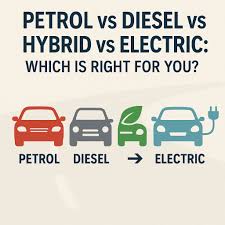
The decision between Petrol, Diesel, and Electric in 2026 is no longer just about mileage; it’s about your monthly running, city vs. highway usage, and local regulations (like the 10-year diesel ban in Delhi NCR).
Here is a 2026 breakdown to help you decide which fuel type is truly “better” for your lifestyle.
1. Cost Comparison (At a Glance)
Fuel prices and EV tech have shifted significantly. In 2026, petrol averages ₹103–₹108/litre, while home charging for an EV remains the most economical energy source.
| Feature | Petrol Cars | Diesel Cars | Electric Cars (EVs) |
| Upfront Price | Lowest | Moderate (₹1.5L+ over Petrol) | Highest (30% more than Petrol) |
| Running Cost | ₹7.00 – ₹9.00 / km | ₹5.50 – ₹6.50 / km | ₹1.20 – ₹1.50 / km |
| Maintenance | Low to Moderate | High (DPF & Turbo issues) | Lowest (No engine/oil) |
| Resale Value | Stable | Declining in Metros | Improving but Uncertain |
| Ideal Usage | Under 1,000 km/month | 1,500+ km/month (Highways) | 1,200+ km/month (City) |
2.The Case for Petrol: The “Safe” Default
In 2026, petrol cars remain the safer bet for low-mileage users and those who don’t want to deal with complex emissions hardware or charging logistics.
- Pros: Cheapest to buy initially, refined and quiet engines, and no “range anxiety” or “DPF clogging” in bumper-to-bumper traffic.
- Cons: Highest running costs; fuel price volatility hits petrol owners the hardest.
- Best For: Urban drivers clocking less than 10,000 km per year.

3. The Case for Diesel: The Highway Workhorse
Despite tighter norms, diesel still leads in highway efficiency and torque for heavy SUVs.
- Pros: Incredible tank range (700–900 km per fill), superior “pulling power” for hilly terrain or fully loaded cars, and better highway mileage than petrol.
- Cons: Expensive BS6/BS7 maintenance (DPF filters need regular highway runs to clear), and a limited 10-year lifespan in regions like Delhi NCR.
- Best For: Long-distance travelers and SUV owners driving 20,000+ km annually.
4. The Case for Electric: The Future-Proof Saver
EVs have become the smarter choice for high-mileage urban commuters in 2026, especially with the expansion of public fast-chargers.
- Pros: 70–80% lower running costs than petrol, instant “zippy” acceleration, silent cabin, and significant government tax benefits (5% GST).
- Cons: Higher initial purchase price and the requirement for a dedicated home charging point for maximum convenience.
- Best For: Tech-savvy city dwellers with a fixed parking spot and high daily usage.
5. Final Verdict: Which is Better for YOU?
Choose Petrol if: You drive rarely, have a tight initial budget, or live in an apartment without EV charging. It’s the least “hassle” option for 2026.
Choose Diesel if: You live for road trips. If your car is a tool for 500+ km journeys or heavy loads, diesel’s range and torque are still unmatched.
Choose Electric if: You drive 40–50 km daily within the city. The savings of nearly ₹80,000+ per year on fuel will pay back the higher upfront cost within 3–4 years.
Visualizing the Content
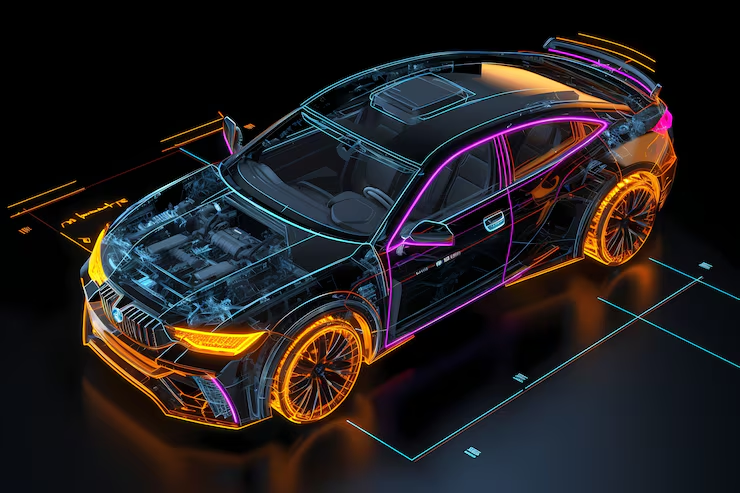
- Cost-Per-KM Chart: A bar graph showing ₹1.2 (EV) vs ₹6 (Diesel) vs ₹8 (Petrol).
- The “Home Charger” Setup: A lifestyle shot of a modern Indian home with an EV plugged in overnight.
- Under the Hood Comparison: A split image of a complex Diesel engine vs a simple, clean EV motor.
- The Highway Range Graphic: A map visual showing how far a Diesel car goes on one tank vs an EV on one charge.
- Environment Iconography: A “Green Plate” (EV) vs a standard plate, highlighting the environmental impact.
Which of these fits your typical weekly driving routine?